Part A: Research
geographic location, language(s) spoken, population, spiritual practices/religion, schooling/education, ethics, values, practices, scientific knowledge, etc.
Tukano
The Indians who live on the banks of the Uaupés River and its tributaries - the Tiquié, Papuri, Querari and other minor rivers - today belong to 17 ethnic groups, many of which also live in Colombia, in the Uaupés and Apaporis river basins (tributary of the Japurá), the principal tributary of which is the Pira-Paraná River.
Tukano proper language. There are about 15 other languages but the majority of speakers in the Tukano tribe speak Tukano proper. Also many indigenous groups around the Tukano tribe speak this language as well. 20, 000 people speak this language.
They call themselves Ye"pâ-masa or Daséa. This is the most numerous group of the Eastern Tukanoan language family. They are concentrated primarily on the Tiquié, Papuri and Uaupés rivers; but they are also living on the Rio Negro, below the mouth of the Uaupés, and also in the city of São Gabriel
The Tukano are traditional manufacturers of ritual benches, made of wood (sorva) and painted, on the seat of the bench, with geometric motifs similar to those found in weaving. The bench is a highly valued object, obligatorily used in cerimonies and rituals, where the leaders, the kumua (chanters) e bayá (cerimonial chiefs) sit.
They believe in rebirth and reincarnation
Animals are seen as people in their religion
All creatures that can see and hear, that communicate with their own kind, and that act intentionally are "people" - but people of different kinds. They are different because they have different bodies, habits and behaviours and see things from different bodily perspectives. Just as stars see living humans as dead spirits, so also do animals see humans as animals. To vulture eyes, when humans go fishing, they fish in rotting corpses and catch maggots; to jaguar eyes, humans are dangerous predators who drink blood as beer; to fish it is wonder that humans can breathe underwater. But of course humans see things the other way round.
küni-oka "weapons or shields"
Men and women both have gender roles. the man is expected to go out and hunt while the woman are expected to stay home and care for the children (because they gave birth to them) and to deal with all meals when the men return with their huntings and gatherings.
All adult men are shamans to a point
3 pictures

Art is very important in Tukano culture. Many times elders take time out of their day to teach the youth how to create such beautiful artwork as well as share stories with the youth as they do so. This makes the community a very engaging community who cares about each other.
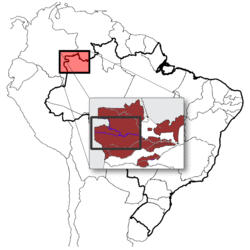
Here this is a map of south america and it shows where exactly the Tukano live. It gives those who do not know by words where the Tukano live a visual. Here this is on the border of Columbia and Brazil.

The caxiri is a welcoming dance that is very important in the Tukano culture. Their religion and culture is valued above all else. Because of this it makes them a very welcoming and warm tribe.
Paragraph on the Tukano
Personally, I felt the Tukano was a really interesting tribe to learn about. First off, they live on the border of Columbia and Brazil, specifically along the rio negro. There are also many other tribes all along the border of Columbia and Brazil. Because there are so many tribes, the Tukano has learned how to deal with other people and are a sociable tribe. Above, you will find an image of a welcoming ceremony. Whenever someone new enters the tribe, the whole community does a welcoming dance for the person to show that they are welcome in their community and that they will take care of them like a family would. The elders are also very involved with the youth. In their free time they are teaching the youth all about their art and how to create certain pieces of art. While they are teaching about the art, stories are also passed onto the youth. When the youth grow to be elders in the tribe the stories continue to pass on through the generations. Something that is really interesting about this specific tribe though is that when they look at animals, they do not look at them as just animals. Instead they see them as people. Just people who look different. Instead they have four legs and a tail with more fur then the regular person does. Because of this, the animals are aloud to come to big ceremonies and therefore treated like any other person during the ceremonies. The Tukano also have great relationships with the many different tribes around them. Of course, most of them all speak the same language as the Tukano so trading is made easy, but many of their interactions are amicable and nice. The Tukano tribe is a very interesting tribe in Columbia and visiting would be very fun, especially with how warm and welcoming they are to the world around them.
Part 2: WOK
To what extent is imagination used in indigenous cultures in order to understand
To what extent is memory connected to culture in an indigenous culture
Imagination is extremely important to the Tukano culture. Much of their culture is based around creativity and looking at things in an imaginative way. The only way that they would be able to be known for their carvings as well as funeral masks and art is with an imagination. Also the Tukano have many different stories and without the use of imagination there is no story. This is also where memory comes in as a Way of Knowing. Memory is key to being able to pass on different stories and traditions. The Tukano take those stories into account in their regular day lives.

Memory can be highly connected to a culture. This is due to the fact that a culture continues to live as long as the past traditions, advancements, and ancestors were preserved in memory. If there is no evidence, or no memory of an indigenous group than the group will no longer exist.
ReplyDeleteTo what extent is imagination used in indigenous cultures in order to understand?
ReplyDeleteI believe that imagination is greatly used by indigenous cultures in order to understand. Many if not all indigenous people have never come in contact with the "real world" so they have never experience what seems natural to us like what a car looks like, or how to eat with a spoon. These people need to use their imagination to understand the purpose of these objects because they have never came in contact with them in their culture.
To what extent is memory connected to culture in an indigenous culture
ReplyDeleteMemory is very connected to an indigenous culture for memory provides a link to the culture's history. Memory is a way to pass on traditions that exist within the culture to future generations in attempt to keep the culture alive. Stories, songs, even recipes for cultural dishes can be passed on or written down to be preserved by the culture's future generations.
Unfortunately many indigenous cultures that cease to exist have problems with its memory. With the growing modernization of our world, younger generations tend to desire modern technologies and adapt other modern cultures, forgetting the ways of their indigenous culture. Some are even forced into different cultures, such as those trying to receive an education to succeed in the ever-so demanding world, meaning many students have to learn other ways of living and leave their other life behind.